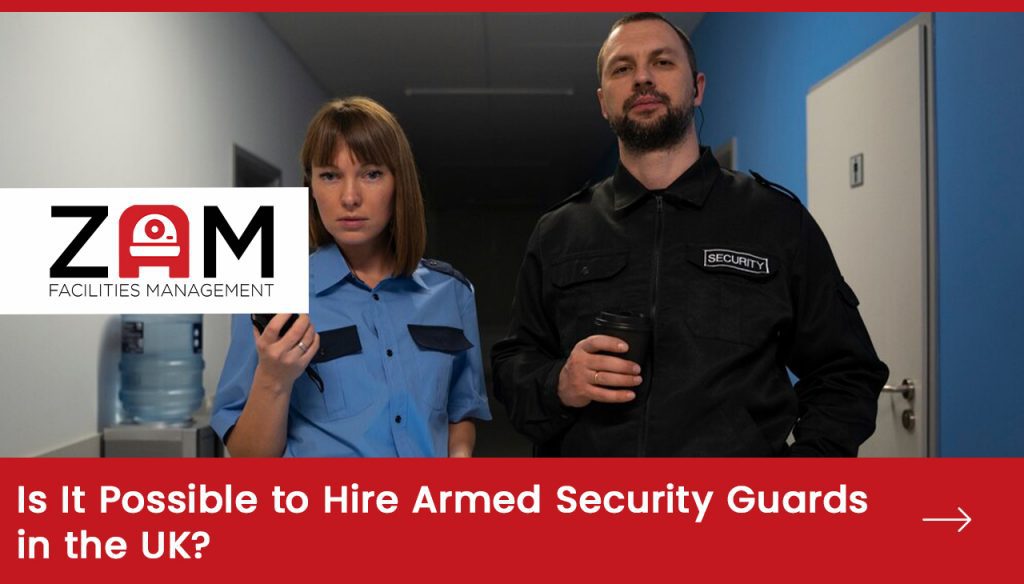
In this day and age, where wellbeing and security are fundamental, businesses and individuals are exploring every possible option to safeguard their assets and loved ones. While traditional unarmed security guards have long been a common sight, the question arises: is hiring armed security personnel in the United Kingdom possible?
This inquiry delves into the heart of a complex and often controversial topic that has sparked debates across various sectors and raised eyebrows among the general public. At its core, the issue revolves around striking a delicate balance between ensuring safety and adhering to the stringent regulations that govern the use of firearms in the UK.
Blog Outline
ToggleWhen Armed Security Guards Might Be Necessary
Imagine a scenario where your business operates in a high-risk environment, dealing with valuable goods or sensitive information. Or perhaps you’re a high-profile individual concerned about potential threats. In such cases, armed security guards could provide an added layer of protection and deterrence against criminal activities.
However, the prospect of armed civilians patrolling our streets and premises raises legitimate concerns about public safety, training standards, and the potential for misuse or escalation of force. These valid apprehensions have shaped the intricate legal framework surrounding the employment of armed security personnel in the UK.
The Legal Landscape: Navigating the Complexities
The UK has a powerful arrangement of regulations and guidelines overseeing the utilization of guns, including those conveyed by confidential security faculty. The essential regulation that resolves this issue is the Guns Demonstration of 1968, which frames the permitting necessities, conditions, and limitations for the belonging and utilization of guns.
Under this Act, individuals seeking to work as armed security guards must obtain a Firearm Certificate from the local police force. This process involves a rigorous vetting procedure, including background checks, interviews, and assessments of the applicant’s suitability to handle firearms responsibly.
Additionally, the Security Industry Authority (SIA) plays a crucial role in regulating the private security industry in the UK. Armed security guards must hold a valid SIA license, which requires completing specialized training programs and meeting strict eligibility criteria.
Circumstances and Sectors Where Armed Security Guards May Be Permitted
While using armed security guards in the UK is highly regulated and subject to stringent conditions, specific circumstances and sectors may permit their employment.
- High-Risk Businesses: Companies dealing with valuable goods, such as cash-in-transit services, jewellers, or bullion traders, may be eligible to employ armed security personnel to safeguard their assets and personnel during transportation or on-site operations.
- Critical Infrastructure Protection: Facilities considered vital to national security or public safety, such as power plants, airports, or government buildings, may sometimes utilize armed security guards to enhance their security measures.
- High-Profile Individuals and Events: Celebrities, dignitaries, or high-net-worth individuals who face credible threats may be granted permission to hire armed close protection officers for their safety.
- Specialist Security Roles: Armed security personnel may be authorized under specific circumstances and with appropriate licenses in certain specialized roles, such as maritime security or high-risk environment operations.
It’s important to note that the decision to employ armed security guards is not taken lightly and is subject to a thorough risk assessment and approval process by relevant authorities.
Rigorous Training and Vetting: Ensuring Public Safety
Armed security guards in the UK must undergo extensive training and vetting processes to ensure public safety and the responsible use of firearms. These measures are designed to uphold the highest standards of professionalism and accountability.
Training programs for armed security personnel typically cover various topics, including firearms handling, marksmanship, legal frameworks, conflict de-escalation techniques, and crisis management. Only individuals who demonstrate exceptional skills, judgment, and adherence to strict protocols are granted the authority to carry firearms while on duty.
Furthermore, armed security guards are subject to ongoing training, assessments, and regular license and certification renewals.This guarantees that their insight and abilities stay modern and they keep on gathering the rigid prerequisites set out by the pertinent specialists.
The Way Forward: Balancing Security and Public Trust
As the UK navigates the complex issue of armed security guards, it is crucial to strike a balance between addressing legitimate security concerns and maintaining public trust. Ongoing dialogue, transparency, and a commitment to upholding the highest standards of professionalism are essential.
While the employment of armed security personnel is subject to strict regulations and limitations, it remains an option for businesses and individuals facing credible threats or operating in high-risk environments. However, this decision should be made judiciously, with an intensive comprehension of the legitimate prerequisites and a pledge to public security.
By adhering to the robust legal framework, ensuring rigorous training and vetting processes, and fostering open communication with relevant authorities and stakeholders, the UK can continue to navigate this complex issue with the utmost care and responsibility.
Conclusion
In conclusion, the ability to hire armed security guards in the UK is a possibility, but one that is carefully regulated and subject to stringent conditions. By prioritizing public safety and upholding the highest standards of professionalism, the UK can balance addressing security concerns and preserving public trust.